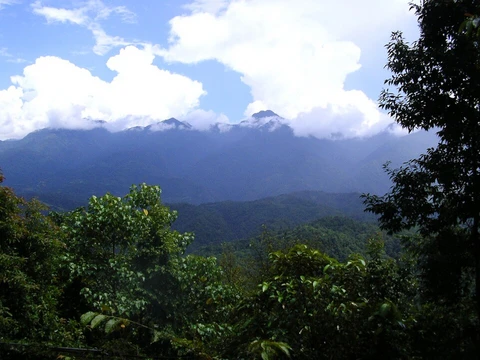
Stora Sjöfallet National Park
Swedish national park with a waterfall diminished by hydroelectric development.

The park was originally created to protect the great waterfall Stuor Muorkkegårttje, but subsequent hydroelectric development severely reduced its water flow, leading to the falls' removal from the park.
- location
- Norrbotten County, Sweden (Gällivare and Jokkmokk municipalities)
- designations
- UNESCO World Heritage Site (Laponian area), Natura 2000
- notable_feature
- Five-level waterfall on the Lule River, each level named after a historical figure
Lore & Background
The park's name derives from a five-level waterfall on the Lule River. Each level is named after a person important to Lapland's history: SG Hermelin, Lars Levi Laestadius, Düben, Carl Anton Petterson, and Henrik Adolf Widmark. The park's geography includes the mountain Áhkká south of the artificial lake Akkajaure, with thirteen peaks and ten glaciers. Global warming causes the glaciers to melt 10 meters each year. Bird species observed include European golden plover, meadow pipit, and the rare lesser white-fronted goose. Mammals include reindeer, moose, red fox, and rarer species like lynx, wolverine, and brown bear. Tourism access is easiest from the road from Porjus, and Kungsleden passes through the northern part. Activities include fishing, skiing, snowmobiling, hiking, and ice climbing. Special rules prohibit hunting, fishing, picking plants, collecting minerals, and flying below 300 meters, but allow gathering dead branches for fires and picking berries and fungi.
Reader's Guide
Stora Sjöfallet National Park illustrates the tension between conservation and industrial development. This history highlights how protected status can be compromised by subsequent resource extraction. The park remains significant as part of the UNESCO Laponian World Heritage Site and Natura 2000 network, preserving a landscape shaped by ancient continental collisions and ice ages. Its diverse flora and fauna, including rare species like the lesser white-fronted goose and Arctic fox, underscore its ecological value. The park also reflects Sami cultural heritage, as reindeer pastures of two Sami communities lie within its boundaries. Today, visitors can explore the Áhkká massif, Teusa valley, and other attractions, while observing strict rules to minimize human impact. The park's story serves as a cautionary example of the challenges in balancing preservation with economic interests.
Did You Know?
- The park's waterfall originally had five levels, each named after a historical figure including Lars Levi Laestadius, founder of Laestadianism.
- Global warming causes the park's glaciers to melt 10 meters each year.
- The park is part of both the UNESCO World Heritage Site Laponian area and the Natura 2000 network.
Frequently Asked Questions
What are Stora Sjöfallet National Park's powers/role?
The park serves as a UNESCO World Heritage Site within the broader Laponian area and also holds Natura 2000 designation, safeguarding alpine terrain and river ecosystems. Its most celebrated feature is a five-tier cascade on the Lule River, with each drop named after a historical figure.
How does Stora Sjöfallet National Park's story end?
The park's founding purpose—protecting the great waterfall Stuor Muorkkegårttje—was ultimately undermined when hydroelectric projects drastically cut the water flow. The diminished falls were eventually removed from the park's boundaries, leaving the landscape altered from its original state.
More in Mountain And Alpine Reserves 1-19
Spotted an error? Know more?
This is a living reference — every entry is fact-audited, and reader corrections feed straight into our audit queue. Suggest an edit · See this site's audit record